
Produce Store Owners Shed Light on the Future of Dutch Food Culture


Two hundred fifty thousand residents are living in the municipality of Groningen and of them 10% are international. Accompanied by new cultures, traditions and habits, the Dutch food culture can be influenced. A cheese store owner and a farmers market saleswoman share their experiences with nutritional cultural changes and their future expectations.
When thinking of traditional Dutch foods specific to Groningen, cheese and Groningen cake are the most popular. The sales at De Boergondiër, a cheese store in Groningen, represent this. The most sold products there are young cheese and Knolskoek, a type of cake with rye flour and molasses base with cashews and fruit throughout.
Having started De Boergondiër 12 years ago, Alwin’s clientele remains “predominantly Dutch, averaging at around 35 years old.” To him, this shows that “Dutch culture is still appreciated [by the Dutch] and not forgotten in favor of Middle Eastern food and culture.”
He likes that there are many cultures and that everyone makes room for each other. “As long as we are willing to try each other’s cultures, I don’t see traditional Dutch things disappearing soon,” says Alwin.
“Everything I sell is local, which is attractive to many,” Alwin says. These products “pull the Dutch to his store,” he says. Looking at the stores that surround his own, Alwin still feels that the Dutch food culture is represented enough and remains present and popular in the ever-growing city.
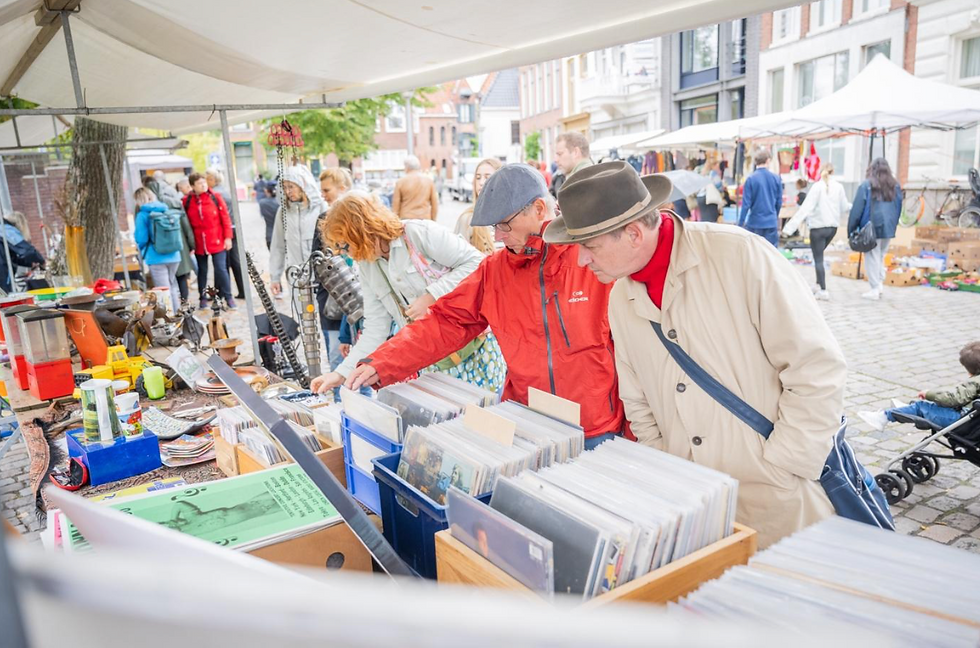
However, this sentiment is not shared by all. At the market, set up on the Vismarkt in Groningen this week, many different types of stands are looking to sell produce and other products. Marleen, a worker at the Zwerwer’s Groente & Fruit stand, says that, although many people want to buy fresh fruit and vegetables, their main demographic has shifted from Dutch to international.
The balance between imported and home-grown products at their stand will “most likely remain equal in the coming years,” Marleen says, indicating that the food culture will most likely not be affected. However, according to Marleen, the customers will change. In the five years that she has worked there, she has found herself “speaking English more often than Dutch.”
Having more non-Dutch customers and noticing these similarities at other stands, Marleen misses the young Dutch people and the stories they share. This impression comes from the fact that the internationals are “more timid and less likely to stay and have a chat,” she says. The average age of her Dutch customers is over 50, and the younger generations are mostly foreign.
Marleen also says that “internationals buy more products such as exotic fruit, spices and herbs, whereas the Dutch buy what they are familiar with.” This indicates a divide, but “not one big enough that what is being sold at these markets will be catered more towards international people in the future,” says Marleen.
The biggest change Marleen and Alwin see happening is that there will be more internationals, but as long as the Dutch do not leave, neither will the Dutch food culture.

Comments