
May 2024 in New Caledonia: Léa and Sophie’s Stories Amid Chaos

Burned vehicle following May 13, protesters waving Kanak flags, and burned building following May 13, Saint-Louis © Léa
Two men were killed overnight on Wednesday, September 18th, during a law enforcement operation in Saint-Louis, a pro-independence stronghold in New Caledonia. With this latest development, the death toll since the outbreak of unrest in May has risen to 13. The violence, which has come to be known as 'May 2024,' has reignited the long-standing debate over the island's independence. Two young women, Léa and Sophie, from opposing sides of the conflict, share their experiences during this time of unrest.
May 12, Saint-Louis
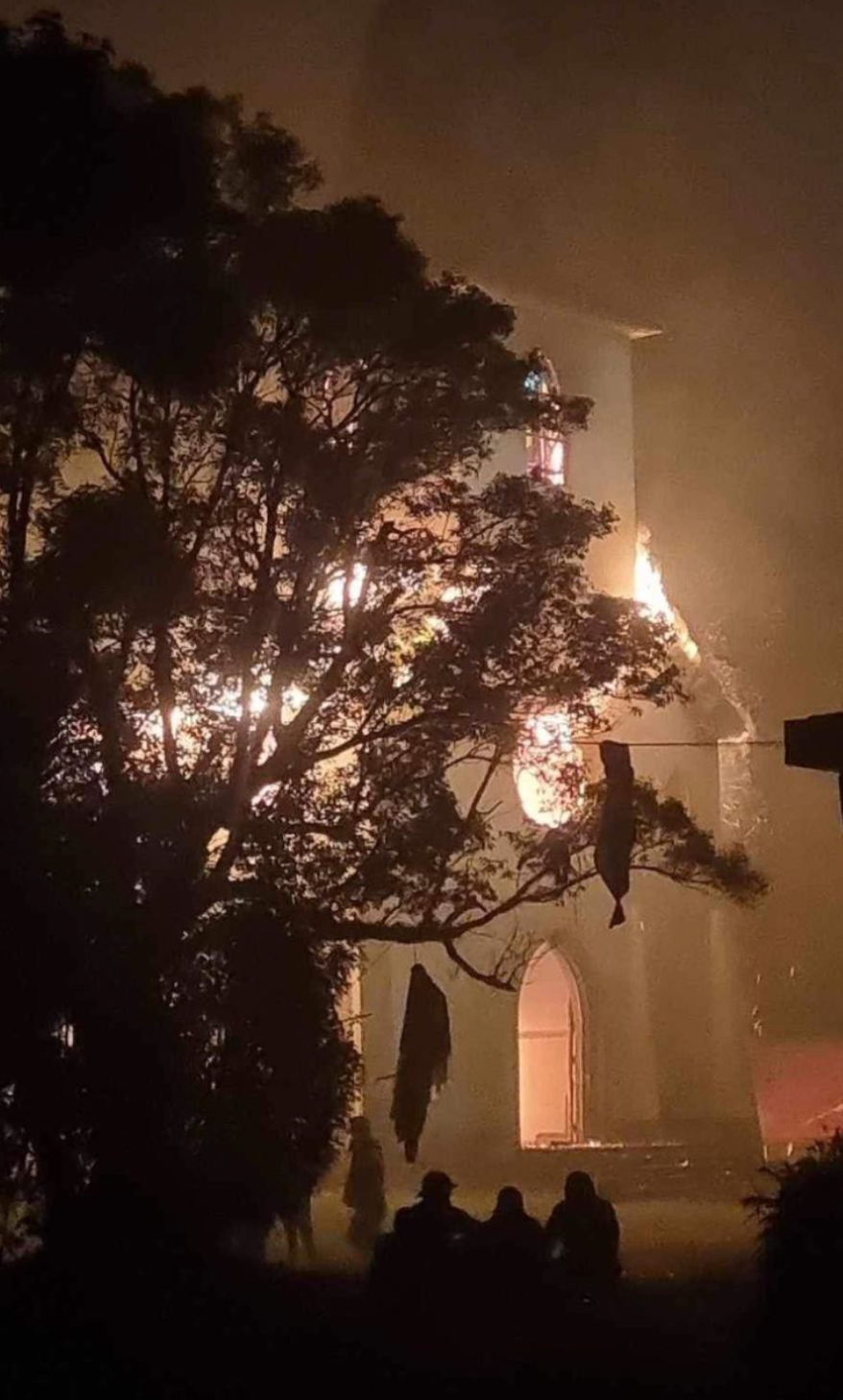
Léa, a Kanak descendant living in mainland France whose identity will be withheld for safety reasons, was visiting her grandparents in Saint-Louis, an aboriginal community near Nouméa, when she woke up to a frightening scene. "I went outside and saw everything burning," she says. "From the hill, I could see it all—cars, roads, buildings. Even the Decathlon store was on fire. I didn’t understand what was happening. I found my grandfather, and he said, ‘It’s war.’"
Access to hospitals was blocked, streets were crowded, and graffiti covered the walls. The French authorities ordered a curfew, banned TikTok on the territory, and sent more than 1,000 policemen and gendarmes as reinforcements. Léa described the streets being taken over by pro-independence protesters. Shops were looted, and roads were blocked—marking the beginning of ten chaotic days in Saint-Louis.
Tensions Over Independence
The violence in May was the result of deep-rooted political tensions. For decades, New Caledonia has been divided over the issue of independence. Many Kanak people, the indigenous population, support independence, while loyalists, descendants of French settlers, want to remain part of France. However, the situation is complex. While most Kanaks back independence, some don’t agree with the more extreme actions of certain groups. Likewise, some loyalists aren’t entirely against independence but believe the island can’t survive economically without France’s support.

Three referendums were held between 2018 and 2021 to decide whether New Caledonia should become independent. Each time, the majority voted to remain with France. However, the last referendum in 2021 was boycotted by pro-independence groups, who claimed it was unfair due to the COVID-19 pandemic. This refusal to boycott worsened frustrations, particularly among young Kanaks, setting the stage for the violent events of May 2024.
May 13, Nouméa

The day after Léa’s experience, Sophie, a young loyalist whose family moved to New Caledonia in the 1990s and who will also remain anonymous, was leaving from work in Nouméa, the capital. "There were lots of young people in the streets waving Kanak flags," she recalls. On her way home, she saw teenagers setting fire to flags and trash bins. Sophie hurried to her brother-in-law’s house for dinner.
"We were checking social media, and it became clear that things were getting worse," she says. "Suddenly, we heard nearby shops being smashed. We rushed home, and I couldn’t sleep that night. It lasted for ten days—roads were blocked, and fires were everywhere. We felt the tension building, but we never thought it would get this bad. It felt like a lost generation in the streets."
Kanak, Caldoches, and Colonial Divides
The stories of Léa and Sophie highlight the deep divisions in New Caledonia’s society. The population is a mix of Kanak, descendants of European settlers (known as "Caldoches"), and migrants from Oceania, Asia, and mainland France. This diversity has created a complex society with differing views on the island’s future.
For many Kanaks, independence represents a chance to right historical wrongs. Léa, as a Kanak descendant, feels connected to this fight, although her family doesn’t hold strong political views. Sophie, a loyalist, sees the drive for independence as more about identity. "They want to be recognized as the first people, but they already are," she says. She believes New Caledonia lacks the resources to survive on its own without French support.
An Uncertain Future
After the violence of May 12 and 13, life in New Caledonia slowly returned to normal, but the trauma remains fresh. Léa, who returned to France in mid-June, recalls that time as incredibly difficult. "Leaving my family, especially my grandmother, felt like I might never see them again," she says. The day she left, a man in Saint-Louis was shot in the head. Hours later, Léa, the Kanak descendant, was on a plane back to France, where she overheard two tourists discussing their time on the island. "They were sad to leave. Just days before, they were enjoying the beach in Nouméa. Meanwhile, my home was being patrolled by the army."
Months later, back in France, Léa reflects on the events and how they’ve changed her perspective. "I wanted to go back to New Caledonia, but now it seems crazy. The country is in crisis. I wonder—how do they still have things left to burn? People in wealthier areas are safer, but I’m really worried for my family in the tribe."
Sophie, the French expats' daughter who lives in New Caledonia, also feels uncertain about the future. "We’re taking it day by day," she says, describing the ongoing economic and social struggles. "I’m on partial unemployment—there is no work, public or private. My sister is unemployed, too, after her factory was set on fire."
The situation remains tense, with a curfew in place from 10 PM to 6 AM. "If you go out, you get fined unless you have a valid reason. It makes it hard to visit friends for dinner," Sophie explains. "We’ve started having pajama parties just to adapt to the new reality."

Deep Divides and Future Hopes
Both Léa and Sophie’s stories shed light on the deep social divides that persist in New Caledonia. "Even before the violence, there was a lack of unity," says Léa. "There are also big public health problems—alcohol, cannabis, and poverty are everywhere. It’s heartbreaking to see so much inequality and injustice."
Sophie points to the frustration of the younger generation, many of whom have taken to the streets. "They were lied to," she says. "They were told independence was coming, but it hasn’t happened. So they keep fighting, but they don’t really know why. We’ve had three referendums, and the answer has always been ‘no.’"
For Léa, the dream of independence remains, but she acknowledges it’s a complex issue. Sophie, on the other hand, prefers autonomy under French control.
The full identities of the sources of these stories are well known to the editors of The Glass Room.


Comments